Lithium vs Diesel Rough Terrain Forklifts: Which Is Right for Your Site?
The rough terrain forklift market is changing rapidly. For years, diesel dominated construction sites, builders’ merchants, agriculture and outdoor logistics operations. Now, lithium-powered rough terrain forklifts are entering the market with significant advantages in efficiency, maintenance, and operating costs.
For businesses investing in new equipment, the key question is this: is lithium electric technology the smarter long-term investment?
In this blog, we compare lithium rough terrain forklifts against traditional diesel models. This should help businesses understand the strengths, limitations, and ideal applications for each.
What Is a Rough Terrain Forklift?
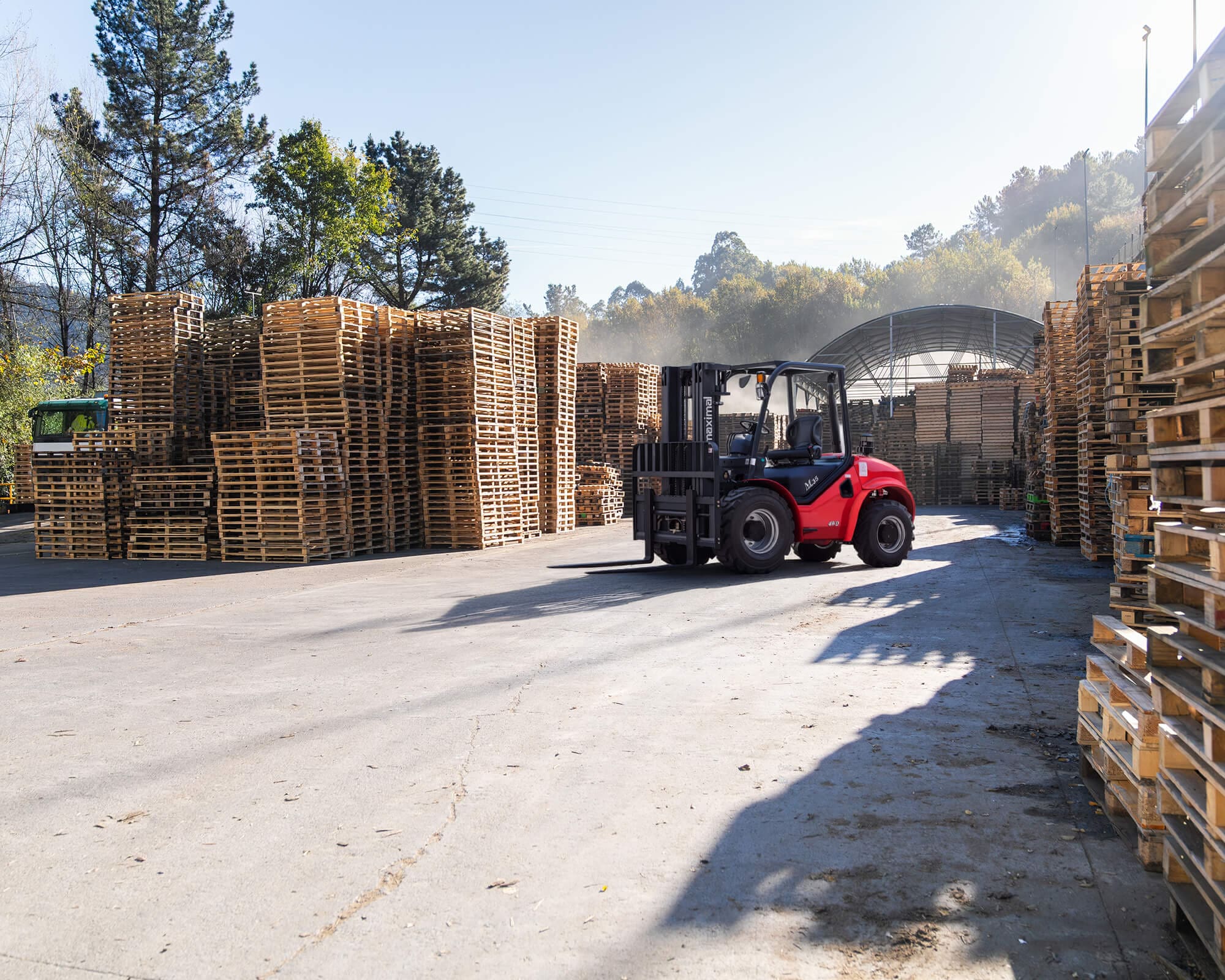
A rough terrain forklift is specifically designed to operate on uneven, muddy, gravel or outdoor surfaces where standard warehouse forklifts would struggle.
These machines typically feature:
- Large pneumatic tyres
- Increased ground clearance
- Four-wheel drive capabilities
- Heavy-duty mast construction
- Strong lifting capacities
They are commonly used across:
- Construction sites
- Timber yards
- Agricultural environments
- Ports and outdoor logistics
- Infrastructure projects
- Event setup operations
Traditionally, rough terrain forklifts have relied on diesel engines due because of their power and endurance. However, lithium-powered alternatives are now offering comparable performance with several operational advantages.
Diesel Rough Terrain Forklifts
Diesel forklifts remain the most common option for heavy-duty outdoor applications.
Advantages of Diesel Forklifts
High Torque and Lifting Power
Diesel engines deliver strong torque, making them highly effective for:
- Heavy pallet movement
- Steep gradients
- Large construction materials
- Continuous outdoor operation
Long Runtime
Refuelling is quick and easy, allowing diesel forklifts to operate continuously with minimal downtime.
Proven Reliability
Diesel rough terrain forklifts have been industry-standard equipment for decades, with well-established servicing networks and operator familiarity.
Things to Consider with Diesel Forklifts
High Fuel Costs
With fluctuating fuel prices, diesel operating costs can become significant over time.
Maintenance
Diesel engines require:
- Oil changes
- Filters
- Exhaust system maintenance
- Engine servicing
- Emissions system repairs
Maintenance costs generally increase as machines age.
Noise and Emissions
Diesel forklifts produce:
- CO₂ emissions
- Particulate matter
- Engine noise
This can create challenges on environmentally sensitive sites or in areas with strict emissions regulations.
Lithium Rough Terrain Forklifts
Lithium-powered rough terrain forklifts represent the newest development in outdoor handling equipment.
Modern lithium battery technology now provides sufficient power and runtime for demanding outdoor applications that were previously dominated by combustion engines.
Key Advantages of Lithium Rough Terrain Forklifts
Zero Emissions
Lithium forklifts produce no exhaust emissions during operation, making them ideal for:
- Low-emission construction sites
- Indoor/outdoor mixed usage
- Environmentally regulated projects
- Sustainability-focused businesses
As more companies work towards net-zero targets, electric fleets are becoming increasingly attractive.
Lower Operating Costs
Electric forklifts eliminate many traditional engine-related expenses.
There is:
- No diesel
- No engine oil
- Fewer moving parts
- Reduced servicing requirements
Over several years, this can significantly reduce total cost of ownership.
Reduced Maintenance
Lithium forklifts typically require far less maintenance than internal combustion alternatives.
There are no:
- Engine belts
- Fuel injectors
- Exhaust systems
- Oil filters
- Radiators
This means less downtime and fewer unexpected repair bills.
Opportunity Charging
One major advantage of lithium batteries is rapid charging capability.
Operators can top up batteries during breaks or shift changes without damaging battery life, unlike older lead-acid systems.
This improves operational flexibility considerably.
Lower Noise Levels
Electric rough terrain forklifts operate much more quietly than diesel machines.
This benefits:
- Urban construction projects
- Residential developments
- Noise-sensitive environments
- Operator comfort
Potential Limitations of Lithium Rough Terrain Forklifts
Higher Initial Purchase Cost
Lithium forklifts often involve a higher upfront investment than comparable diesel models.
However, many businesses offset this through:
- Lower fuel costs
- Reduced maintenance
- Longer service intervals
- Lower total lifecycle costs
Charging Infrastructure
Businesses need suitable charging facilities onsite.
For some remote or temporary projects, this may require additional planning.
Runtime Planning
Although modern lithium systems offer excellent runtime, operations with extremely long continuous shifts may need:
- Charging schedules
- Spare batteries
- Fast charging systems
The Future of Rough Terrain Forklifts
The forklift industry is clearly moving towards electrification. Improvements in lithium battery technology are rapidly narrowing the performance gap between electric and traditional combustion-powered rough terrain equipment.
For many businesses, lithium rough terrain forklifts now offer:
- Comparable performance
- Lower operating costs
- Reduced downtime
- Cleaner operation
- Better environmental compliance
While diesel forklifts will continue to play an important role in heavy industry, lithium technology is becoming an increasingly practical and commercially viable alternative.
Looking for Expert Advice on Rough Terrain Forklifts?
At Maximal, we supply a wide range of rough terrain forklift solutions to suit construction, industrial, agricultural, and logistics applications.
Our dealers can help you identify the right machine for your operational requirements and budget.